
Checking for a Warrant in Massachusetts
Massachusetts has no public statewide warrant search. The Massachusetts Trial Court keeps WMS for authorized users, while MassCourts gives the public only limited case information. A blank result from either one proves nothing; it cannot certify that no warrant exists. If you know the case or citation, start with the Massachusetts court handling it. Otherwise, the official courthouse finder will point you to the right division for the matter.
- Gather the name used in Massachusetts court records, date of birth, citation or case number, notices, and the town or division where the warrant matter began.
- Use MassCourts for public docket context in a Massachusetts warrant case. Remote criminal searches generally require an exact case number, so a blank name search is not a reliable result.
- Contact the Massachusetts issuing court's Clerk-Magistrate or clerk and ask whether an active warrant is tied to the case and what appearance or recall steps apply.
- For an existing Massachusetts record held by a public agency, a focused request to that record's custodian may be appropriate under public-records law. It is not a live WMS query or a substitute for asking the issuing court about warrant status.
- Massachusetts has no public county-sheriff warrant search identified in the official sources reviewed. Use the county directory to locate local offices; ask the serving agency about service only after the court identifies it.
- For a Massachusetts traffic warrant matter, check the citation with the RMV, then ask the court separately about a warrant or default. Payment and warrant recall are different steps.
- If a federal warrant involves a Massachusetts case, contact the federal court or counsel. MassCourts does not search federal warrants.
Police or sheriff staff in Massachusetts can explain how service works. Only the issuing court can confirm warrant status and recall steps.
Massachusetts Warrant Checks Start at Court
When a Massachusetts notice, docket, or missed court date points to a specific warrant case, call the court named on it. Give the clerk enough detail to pull the record. Then ask directly whether the warrant is active, whether a judge must review any request, and what proof will show a recall. Some courts send people to a particular session; others prefer that a lawyer arrange the appearance. There is no uniform statewide walk-in rule, and no central warrant counter anywhere in Massachusetts. When the issuing court is unclear, the Massachusetts Trial Court's location tools can narrow things down by town, case type, or county. County borders help as landmarks, but they do not decide every assignment. The District Court, Boston Municipal Court, Superior Court, and specialty departments each handle matters within their own jurisdictions. Ask the Massachusetts clerk to confirm the right division before you travel or pay a warrant balance.
Inside the Massachusetts Statewide Warrant System
The court-run statewide database in Massachusetts is called the Warrant Management System, or WMS. M.G.L. c.276, §23A requires it. WMS holds arrest and default warrant data for authorized court, law-enforcement, and Registry of Motor Vehicles users, connected through CJIS. The public cannot log in or search by name. Nor is it a public warrant website run by the Massachusetts State Police. MassCourts is the public Massachusetts docket channel, with its own access limits. A case event there can help explain a Massachusetts warrant record's history, but it is not a live WMS status field. The Massachusetts State Police Most Wanted program is a curated tip resource, not a full list of active warrants. For a closer look at how the Massachusetts Trial Court, DCJIS, the RMV, state police, and federal partners each fit in, see the Massachusetts Warrant System page.
| Channel | Who Uses It | What It Can Show |
|---|---|---|
| Massachusetts WMS through CJIS | Courts, authorized law enforcement, RMV | Restricted Massachusetts warrant records; no public search |
| MassCourts | Public, within remote-access rules | Some Massachusetts case and docket details; not a full warrant status check |
| Massachusetts issuing court clerk | Person with a case question or authorized representative | Current warrant status and local recall or appearance instructions |
| Massachusetts MSP Most Wanted | Public tip channel | Selected fugitive notices, not a full Massachusetts warrant list |
How Massachusetts Warrants Move Through WMS
A judicial officer in Massachusetts authorizes process in a case. A clerk then enters the warrant and the police department responsible for service into WMS. DCJIS supplies the CJIS infrastructure and access controls. The Trial Court maintains the Massachusetts warrant records themselves. Service can fall to a police department, a sheriff, a constable, or a state officer, depending on the court's assignment and local arrangements. Recall works the same way in reverse. When a Massachusetts warrant is recalled, meaning withdrawn by the issuing court, the clerk enters that change without unnecessary delay so it can pass through CJIS. Section 23A sets no fixed public update time. The transmission also does not make warrant records searchable by the public. A traffic case may need a separate RMV update or reinstatement step. The official WMS statute lays out the court-to-CJIS framework, not a public query form. No county dropdown, result list, or live warrant count exists there. A docket entry can lag or use different terms, so ask the issuing clerk to confirm the current Massachusetts warrant record.
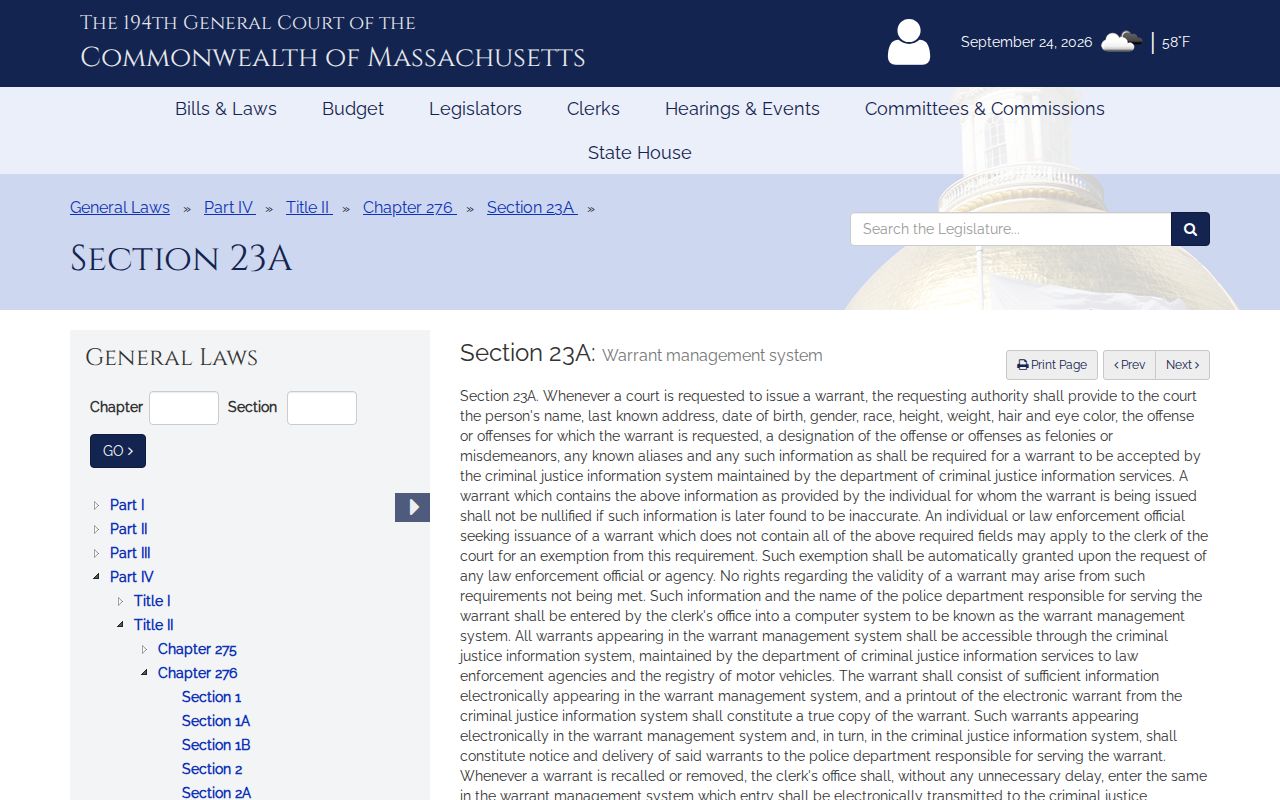
The split matters when checking a Massachusetts warrant case. The clerk controls the court record; law enforcement carries out service.
Massachusetts Warrant Types
In Massachusetts, the word warrant covers several kinds of court process. The trigger and the issuing court matter more than any public-docket label. An arrest warrant follows a judicial probable-cause decision. A default warrant usually follows a missed court obligation. A Massachusetts search warrant authorizes officers to search described property; it is not notice that a person is wanted for arrest. A capias, a court writ ordering appearance or arrest, can arise in civil-contempt or support cases. Massachusetts has no general capias pro fine or Justice of the Peace tier.
| Warrant Type | How It Arises | Who Issues It |
|---|---|---|
| Massachusetts arrest warrant | Sworn complaint and probable-cause review under Massachusetts criminal procedure | Issuing District Court, BMC, Superior Court, or another court with jurisdiction |
| Massachusetts default or bench warrant | Missed required appearance or another court default | Court handling the existing warrant case |
| Massachusetts search warrant | Judicial authorization to search a person, place, or property | Issuing court; affidavit access follows a separate return rule |
| Massachusetts civil-contempt capias | Process in a support or other civil-contempt matter | Probate & Family or another court with authority |
| Federal or fugitive warrant in Massachusetts | Process issued by another state or federal jurisdiction | Issuing jurisdiction, not a Massachusetts state court |
Massachusetts materials often say "default warrant" where other states might say "capias." Confirm the court's exact wording and the event behind it.
Civil Tickets and Massachusetts Warrants
A Massachusetts civil motor-vehicle infraction starts with a citation and a deadline to respond. The RMV and the court each play a role. Payment, a noncriminal hearing, and later license or registration consequences all run through separate steps. Skipping a civil ticket will not trigger a Massachusetts arrest warrant that same day. Instead, a later court appearance process can create its own obligation. A civil-contempt complaint works differently. A summons in that matter may set a Massachusetts court appearance date, and missing it can open warrant process. Criminal motor-vehicle citations follow yet another path, where a missed criminal-court appearance may produce a court warrant plus a separate RMV action. Ask the court about Massachusetts warrant status, and ask the RMV about the ticket or your driving privilege.
Inside a Massachusetts Warrant Record
Do not expect every Massachusetts WMS field to appear online. Section 23A lists the data courts enter for authorized system users, not for the public. A Massachusetts public docket can still carry plenty: case number, parties, charges, events, and disposition. The warrant instrument itself, the service assignment, and current active status may stay off the remote view. Massachusetts also uses no single public statewide warrant-number format or field display.
| Massachusetts WMS identity data | Name, last known address, date of birth, gender, race, physical description, and known aliases |
|---|---|
| Massachusetts warrant offense data | Offense or offenses, felony or misdemeanor designation, and additional CJIS-required data |
| Massachusetts warrant service assignment | The police department responsible for service, which is separate from the issuing court |
| Massachusetts public docket context | May include case number, issuing court, parties, charge, events, and disposition under access rules |
| Massachusetts warrant number, bond, and live status | No public statewide format, status-code table, bond field, or search-result schema was located |
A Massachusetts District Court docket number combines a year, a court code, a case type, and a sequence number. That makes it a case number. It is not a Massachusetts WMS warrant ID, so never treat one as the other when you check Massachusetts warrant records.
Massachusetts Warrants Follow Court Divisions
Massachusetts court structure is why a county name alone rarely finds the right clerk. The Commonwealth holds 14 counties, seven Trial Court departments, 62 District Court divisions, and eight Boston Municipal Court divisions. District Court and BMC boundaries assign cases in ways that defy any simple one-county, one-court map. Think of a county seat as a landmark, not as proof that one office holds every warrant from that county. The two departments also split geographically. Boston Municipal Court serves Boston and Winthrop, while many Massachusetts town ordinance cases elsewhere go to District Court. County geography helps you orient a warrant search, but the Massachusetts Trial Court courthouse finder is what pinpoints the judicial division. The Secretary of the Commonwealth's official county list names county seats for geographic context, and it is not a warrant index. Before mailing anything to a sheriff or a courthouse, check the case notice or ask the clerk which division owns the matter.
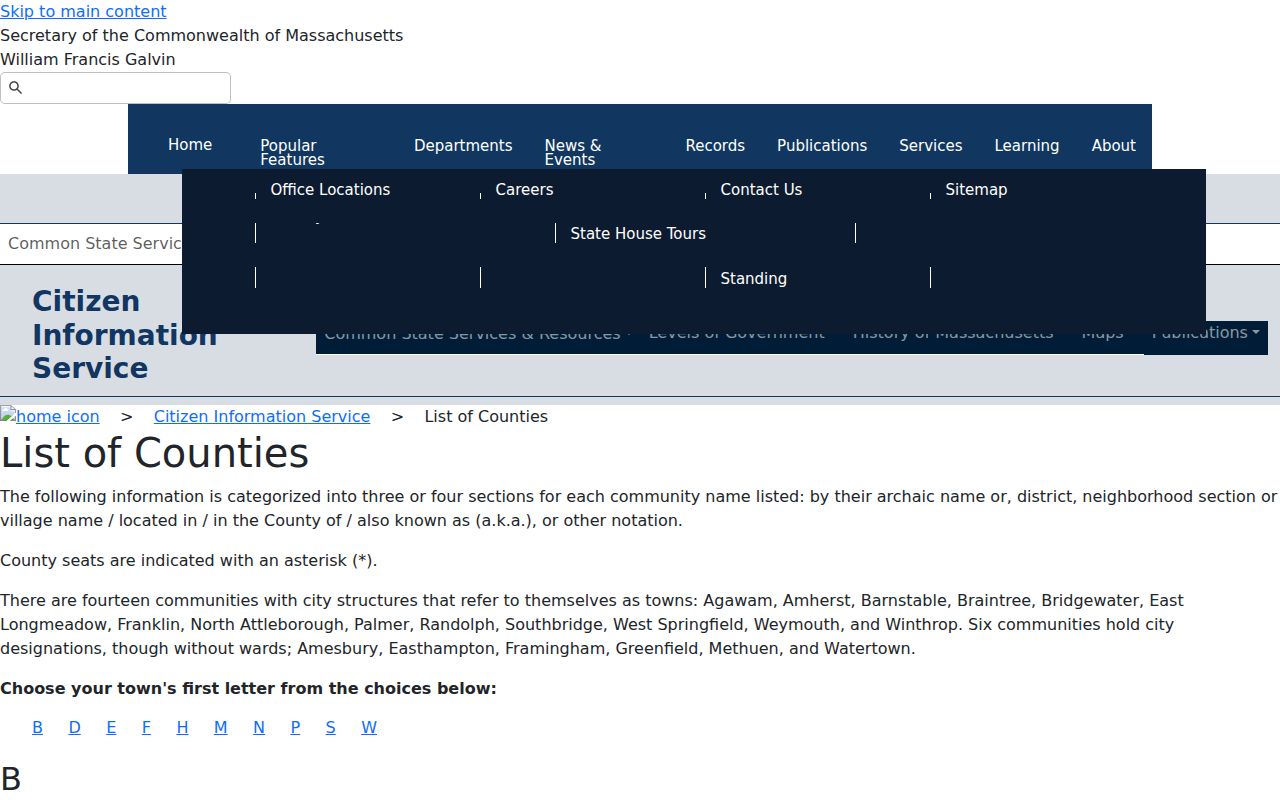
Use the seat as a starting point, then confirm which Massachusetts Trial Court division owns the case.
Massachusetts Warrant Records and Public Access
Massachusetts does not open its WMS database to the public just because docket information appears online. Uniform Rule 5 limits remote access to court records, and the public MassCourts instructions offer no remote criminal name search that works as a warrant check. In-person public terminals can give broader case-name access. Even those do not turn WMS into an open search product. Other Massachusetts rules cover search-warrant affidavits, impounded records, and juvenile matters. An application generally becomes public after return unless sealed or impounded. Juvenile confidentiality limits still create no public warrant query.
Key Massachusetts rules:
M.G.L. c.276, §23A directs the Trial Court to maintain WMS and provide authorized CJIS access. M.G.L. c.66, §10 covers existing agency records, not live warrant queries. M.G.L. c.119, §§60A and 65 protect juvenile records, subject to exceptions; Rule 5 and impoundment rules limit remote access to eligible records.
Massachusetts Warrants in MassCourts and WMS
MassCourts is Massachusetts' public docket tool. WMS is the restricted operational index behind it. An exact Massachusetts criminal case-number search may surface public events, though name-based criminal searching stays limited remotely. A public terminal can widen the case view, but neither channel returns a public WMS warrant-status result. When a Massachusetts docket looks blank, old, or unclear, ask the issuing court directly. Trial Court public terminals do offer broader in-person access than remote browsing. A records request under the Massachusetts Public Records Law can seek existing material from an agency that holds it, yet it cannot force the court to run a real-time WMS query. Response periods and exemptions depend on the record and the office that keeps it. Neither a remote docket nor an in-person terminal promises an active warrant field. Treat both as context. Then verify the Massachusetts warrant status and any recall with the issuing clerk.
Massachusetts Warrant and RMV Holds Differ
Massachusetts keeps professional-license consequences and motor-vehicle privileges on separate tracks. Some licensing authorities get notice of a WMS warrant match. That match is not a public search, and it is not an automatic driver-license failure-to-appear (FTA) hold either. The Registry of Motor Vehicles handles traffic-citation payments and certain license, permit, or registration consequences under motor-vehicle law. The Massachusetts Trial Court's CJIS connection, an RMV account, and a professional-license match each serve different users and different records. The Department of Criminal Justice Information Services describes its own role in the CJIS system. That agency page offers contact details and public system context, not a public warrant database.
For a Massachusetts traffic matter, call the court about recall. Then contact the RMV about the ticket or your driving privilege separately.
Massachusetts Default Warrants After a Missed Date
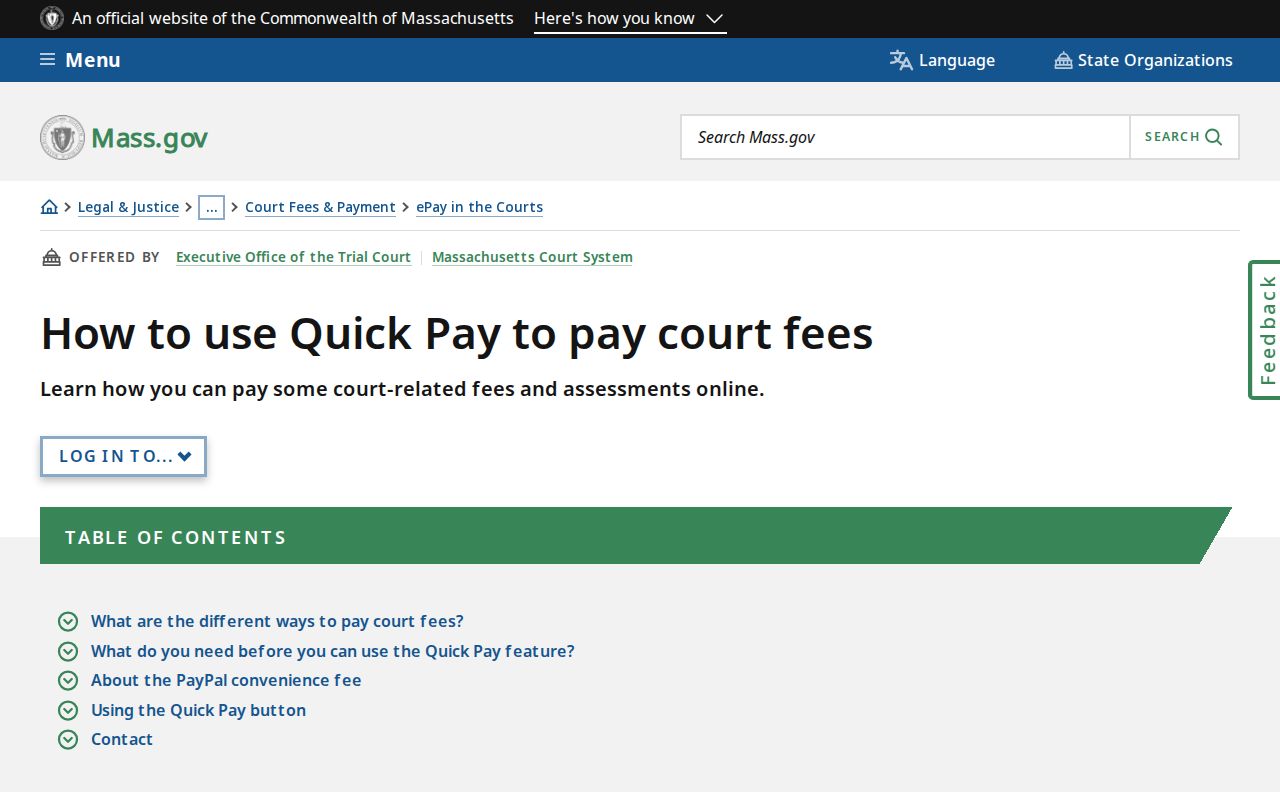
Miss a Massachusetts court date? Call the Clerk-Magistrate or clerk listed on the notice before you travel anywhere or send money. Ask whether the warrant is still active, which session handles recall, and whether a judge or counsel must act. Also ask whether a walk-in is accepted. Massachusetts sets no universal surrender procedure, so confirm the location, time, documents, and amount with that court itself. Some Massachusetts default warrants for unpaid court money qualify for a court-approved payment and discharge route. For other default warrants, M.G.L. c.276, §30 sets a $50 recall fee that may be waived for good cause or substantial hardship. Have the Massachusetts clerk confirm the warrant category and the amount owed. Payment does not clear every case. The Massachusetts Trial Court's Quick Pay instructions state plainly that an online fee payment does not remove an outstanding warrant; a court visit is required. Paying a citation or a court balance is not the same as a recall order from the court.
After Massachusetts court action, ask the clerk whether WMS was updated. Get a receipt or docket entry too. Cash bail may secure release without ending the case or proving a recall. Counsel has options for another warrant type. A lawyer can ask the court to recall the warrant (withdraw it), quash it (set it aside), or arrange an appearance. An active warrant remains subject to service. Massachusetts offers no statewide safe-surrender guarantee.
Federal Warrants Follow a Separate Massachusetts Track
Federal warrants run on a separate track. The U.S. District Court for the District of Massachusetts is one federal district, split into Eastern, Central, and Western divisions. Its process is issued under federal rules. A Massachusetts Trial Court clerk does not enter it as a state warrant. The U.S. Marshals Service executes federal arrest warrants. Its District of Massachusetts Fugitive Task Force, founded in 1999, works with federal, state, and local partners, though that teamwork never changes which court issued the warrant. PACER offers public federal docket access when records are not sealed. It is not an active-warrant search. Unexecuted or sealed process may not appear there. The USMS District of Massachusetts is the federal enforcement contact, while the Massachusetts State Police's VFAS serves a separate state fugitive-support function. A state court cannot recall federal or out-of-state process.
Massachusetts Warrant System and Its 1994 Statute
The Massachusetts Legislature created WMS in 1994 through St. 1994, c.247, §3. The statute now appears as c.276, §23A. Over time, the Massachusetts Trial Court expanded MassCourts into a case-management and public docket layer. Its glossary describes WMS integration with MassCourts as implementation proceeds. That does not establish a public warrant portal. Nor does it confirm that every historical record migrated. Published figures describe court structure, not open warrants. A Middlesex Sheriff unit cleared 935 warrants in 2025. A federal fugitive operation cleared 335 warrants during summer 2026. Those are local-unit and operation totals. Massachusetts publishes no live statewide WMS warrant count. A clearance total cannot estimate current outstanding warrants. None of these numbers tells you how many warrants are actually open across Massachusetts. Recent reforms stay just as specific. A 2025 Massachusetts Probation Service transition to GPS equipment addressed equipment-related warrants in its supervised population. A revised 209A guideline in October 2025 covered court handling of warrant status in certain abuse-prevention matters. Neither created an amnesty or a public search. Ask the relevant court which rule applies to a particular case.
Massachusetts Warrants by County
These Massachusetts county links open local reference sites. A county name helps narrow the geography. The Massachusetts Trial Court, though, assigns cases by department and division. Confirm the issuing court first. Then use local pages for sheriff and courthouse routing. Listed seats come from the Secretary of the Commonwealth, and several counties have more than one historic seat.
Middlesex County
Cambridge and Lowell; the Commonwealth's largest county by 2020 population, with many court divisions serving its communities.
Worcester County
Fitchburg and Worcester; a large central Massachusetts region with several courthouse routes.
Essex County
Lawrence, Newburyport, and Salem; a populous North Shore area with more than one listed seat.
Norfolk County
Dedham; a dense Boston-area county where the case's court division matters.
Suffolk County
Boston; Boston Municipal Court also serves Winthrop, so court jurisdiction may cross a county line.
Bristol County
Fall River, New Bedford, and Taunton; three listed seats serve a broad southeastern region.
Plymouth County
Brockton and Plymouth; a large South Shore area with local court and sheriff resources.
Hampden County
Springfield; a western Massachusetts entry with state and federal courthouse context.
Browse the full directory of all 14 Massachusetts counties to reach every county site.